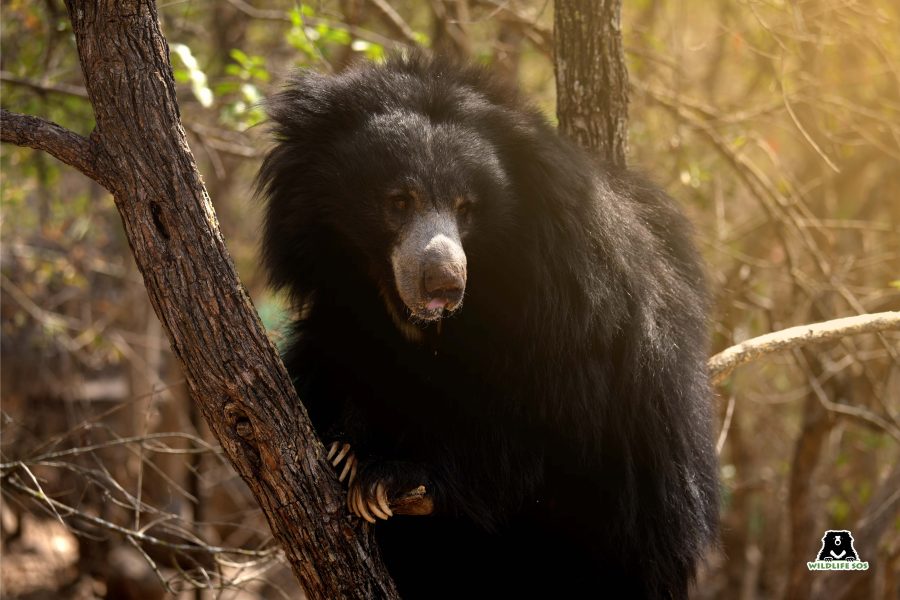

 For more than 400 years, the sloth bear has been a target for human exploitation. A nomadic tribe known as the Kalandars began dancing sloth bears for emperors in the Mughal era. Over the centuries, as the kingdoms in India disappeared, the dancing bear trade transitioned to become entertainment for villagers and tourists who paid for pictures.
Many small cubs saw their mother being killed so that poachers could steal them away from her. Through underground trading the bear cubs would end up in the hands of the Kalandars. With no anesthesia a red hot poker would be driven through the muzzle of the bear, often at the age of just six months. A rope would then be pulled through the painful piercing, and left in place, permanently; for many bears a life at the end of a rope would be all they ever knew.
As of 2002, our research indicated that there were more than 1200 dancing bears scattered throughout the country. But with cooperation from Government officials, and help from our partner organizations, Wildlife SOS has been able to rescue and rehabiliate hundreds of bears. They are now living peacefully in our sanctuaries across India, a life where they’ll never again have to endure cruelty, submission or pain.
When we decided that we simply had to do something to help these bears, we knew that a sustainable solution need to include helping the Kalandar people as well. You can’t force a person to give up the only livelihood they understand, without providing an alternative. Not only would that be inhumane, it would undoubtedly lead to a high recidivism rate.
So, we offered the Kalandars something irresistible. In exchange for their bear, we trained them in an alternative livelihood, provided finances to get them started, and helped them send their children to school. They earn more money than they did by exploiting the bears, and they have legal occupations that let them hold their heads high.
 In the last 7 years, more than 600 bears have been surrendered voluntarily by their masters. All of the families who gave up their bears are now in humane occupations; not a single one has gone back to dancing bears.
We believe that it is important to train the Kalandars, and other local communities, in an alternative employment to reduce their dependency on working animals and the wildlife they poach. We also teach the value of protecting their natural inheritance.
In December of 2009, we rescued what we believe were the last of the dancing bears in India. Click here to read more about the historic moment. We are most grateful to International Animal Rescue (UK), Free the Bears Fund (Australia) and One Voice France for their support of this work.
Despite this success, it is still critical that our anti-poaching efforts continue. Even with very little demand for them today as dancing bears, sloth bear cubs are still being poached, usually for use in Chinese medicine. This ongoing poaching, combined with habitat encroachment, adds up to a serious threat to an already dangerously low population in the Indian Sub-Continent.
For more on our bear sanctuaries, click here.
|
|